
 Water damage drying
 Fire & smoke cleanup
 Mold remediation
 Storm response
 Sewage cleanup
 Reconstruction
Free visual inspection and a written scope of work before any mitigation begins - photos, moisture readings, and drying logs go in your claim file
The scope we write is the scope we bill. Anything new gets shown to you, in writing, before we touch it.
Get your free estimateFast, Reliable Water Damage Restoration Across North Highlands
Water damage restoration in North Highlands usually costs between $1,800 and $6,500 depending on how far the water traveled and what it saturated. Most slab-leak and burst-pipe losses in this area run closer to $3,200 – $4,800 because water wicks under base cabinets, tile, and into concrete before anyone notices. We reach most North Highlands homes within 60 – 90 minutes and have drying equipment on the truck, not back at a warehouse. Call (279) 277-2396 and a real person answers, day or night.
Why Tidemark Water Damage Sacramento Is North Highlands’s Preferred Water Damage Restoration Company
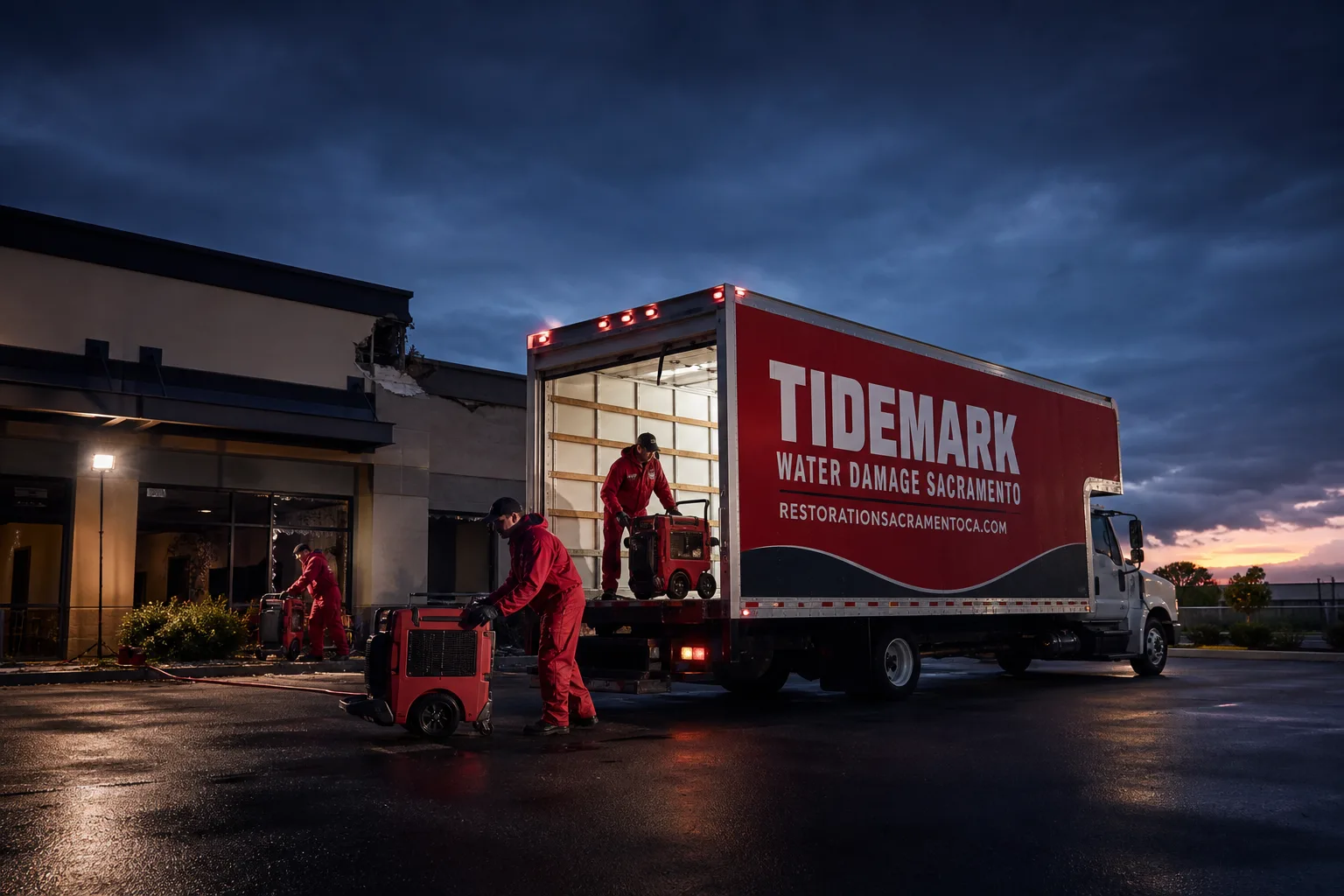
Tidemark has worked on hundreds of North Highlands ranch homes, and the pattern is familiar: flat lots with limited drainage, original galvanized supply lines, polybutylene pipes from the 1970s and 80s, and slab foundations that hold moisture long after the visible water is gone. Rick Sumner and our technicians are IICRC-, RIA-, and IFA-credentialed, background-checked, and uniformed. Shoe covers go on at the door. Drop cloths cover the floor before the first piece of equipment comes in. We write the price before any work starts, every time, on every job. A photo of the cleanup is shared before the crew leaves, so you see exactly what was done and how the house was left.
We coordinate scheduling from our Sacramento office, and crews serve North Highlands locally, which means you’re not waiting for a team to drive across the metro when a supply line splits at 2 a.m. The 365-Day Done Right Promise covers every restoration job we do here. If it’s not done right, we make it right. Not for 30 days. For a year.
Restoration work we handle
Water Damage Cleanup in North Highlands
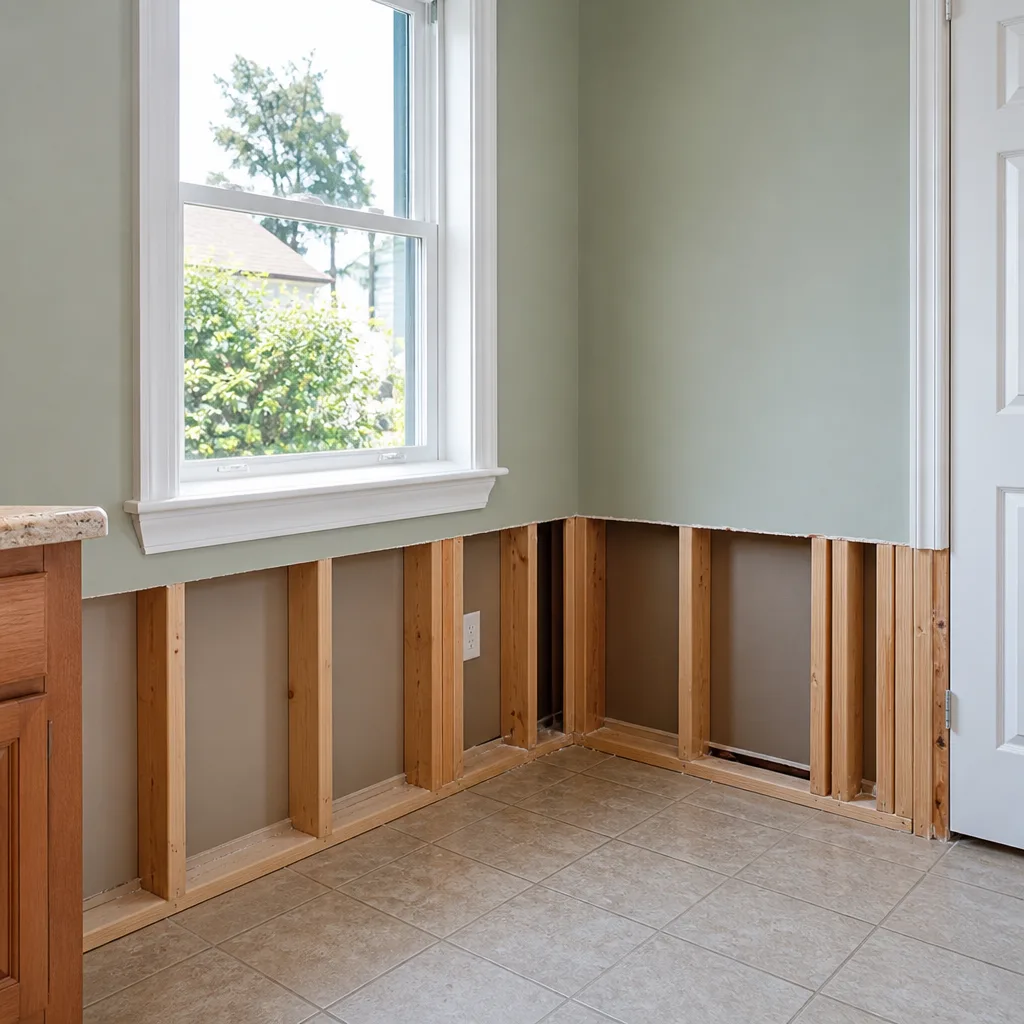
Water damage cleanup in North Highlands usually means extraction first, then moisture mapping, then structural drying, and finally antimicrobial treatment on affected framing and drywall. The flat terrain and older construction here change the job. Water doesn’t run off. It pools against foundations, seeps under sill plates, and follows the path of least resistance into wall cavities and under flooring.
Extraction and Containment
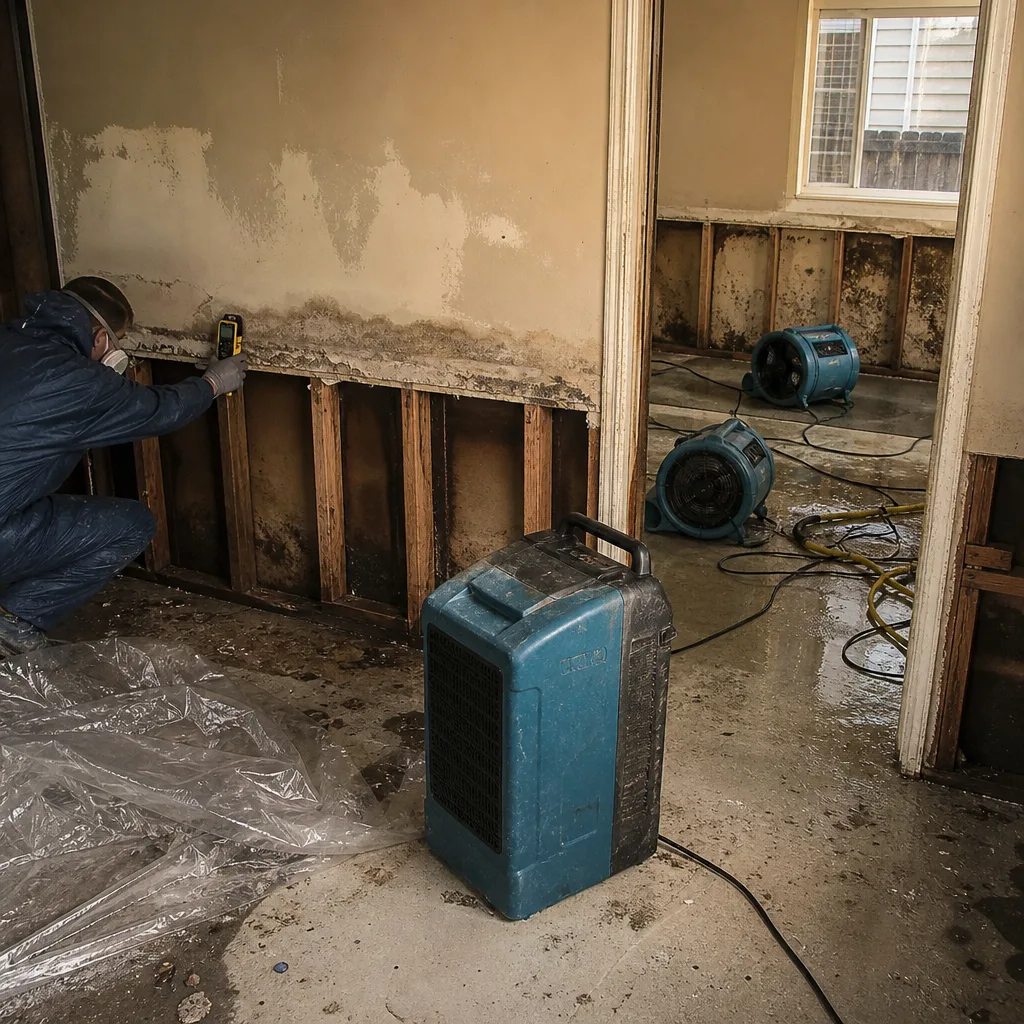
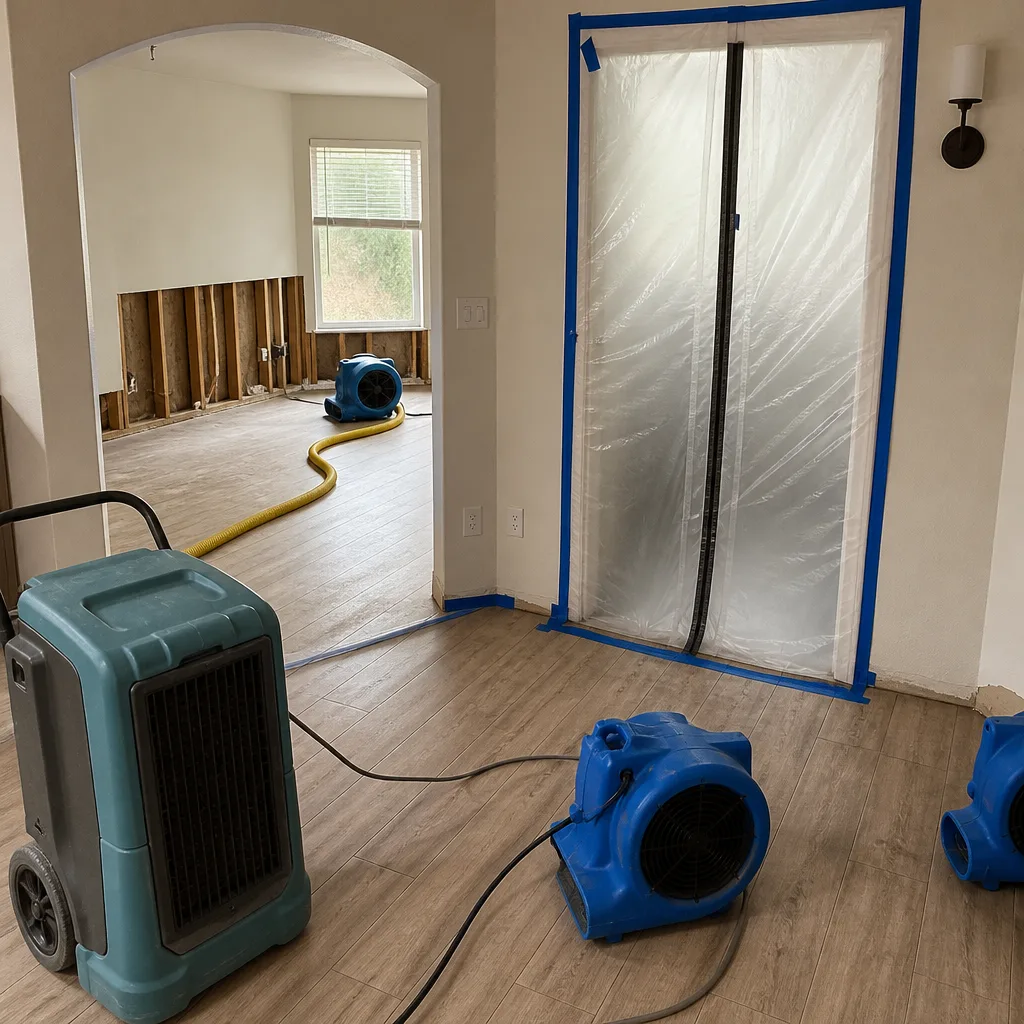
We start by stopping the source, then extract standing water with truck-mounted and portable extraction units. Containment goes up before demolition starts, keeping dust and debris out of the rest of the house, which matters when you have kids or pets in the other room. We name what will be protected: floors, baseboards, cabinets, and personal belongings. Then we protect them.
Crawl Space and Slab Drying
Many North Highlands homes sit on raised foundations or concrete slabs, and both bring specific problems. A raised foundation means a crawl space that holds moisture under the house. A slab means water travels horizontally through concrete and wicks into adjacent rooms. We map moisture with meters and thermal imaging, then run Injectidry floor drying systems and Dri-Eaz dehumidifiers until readings return to pre-loss levels.
Emergency Water Damage Restoration in North Highlands
Emergency water damage restoration in North Highlands typically starts with a burst pipe, a failed water heater, or a winter storm overwhelming an aging roof. The response window matters because slab leaks and pipe bursts here don’t stay localized. They spread under flooring, into cabinets, and through wall cavities.
Burst Pipe and Slab Leak Response
A map of North Highlands losses points squarely at polybutylene and galvanized pipes. The Elverta Road corridor especially, where original 1970s polybutylene lines are still in service, produces sudden whole-house losses. When a 50-year-old pipe lets go, water is running through the house at full pressure until someone shuts off the main. Our first call is to walk you through shutting off the water, then we’re on the road. Extraction starts within the hour.
Overnight and Weekend Calls
Water doesn’t wait for business hours, and neither do we. Calls are answered by a live person 24/7, not a voicemail or a callback queue. If a supply line splits on a Saturday night in a North Highlands ranch, you’ll talk to someone who can dispatch a crew, not someone who promises a call Monday morning.
Trusted Brands We Service in North Highlands
We service and operate equipment from Dri-Eaz, Phoenix, and XPOWER, the same professional-grade drying machines used by leading restoration specialists across the country. Because we stock local parts and supplies for North Highlands jobs, turnaround is fast. We’re not waiting on a shipment from a regional depot when a dehumidifier needs a filter or a pump needs a replacement hose. The gear on our trucks is maintained for this climate: hot, dry summers that accelerate drying and wet winters that demand deeper extraction.
See the difference
 Before
 After
After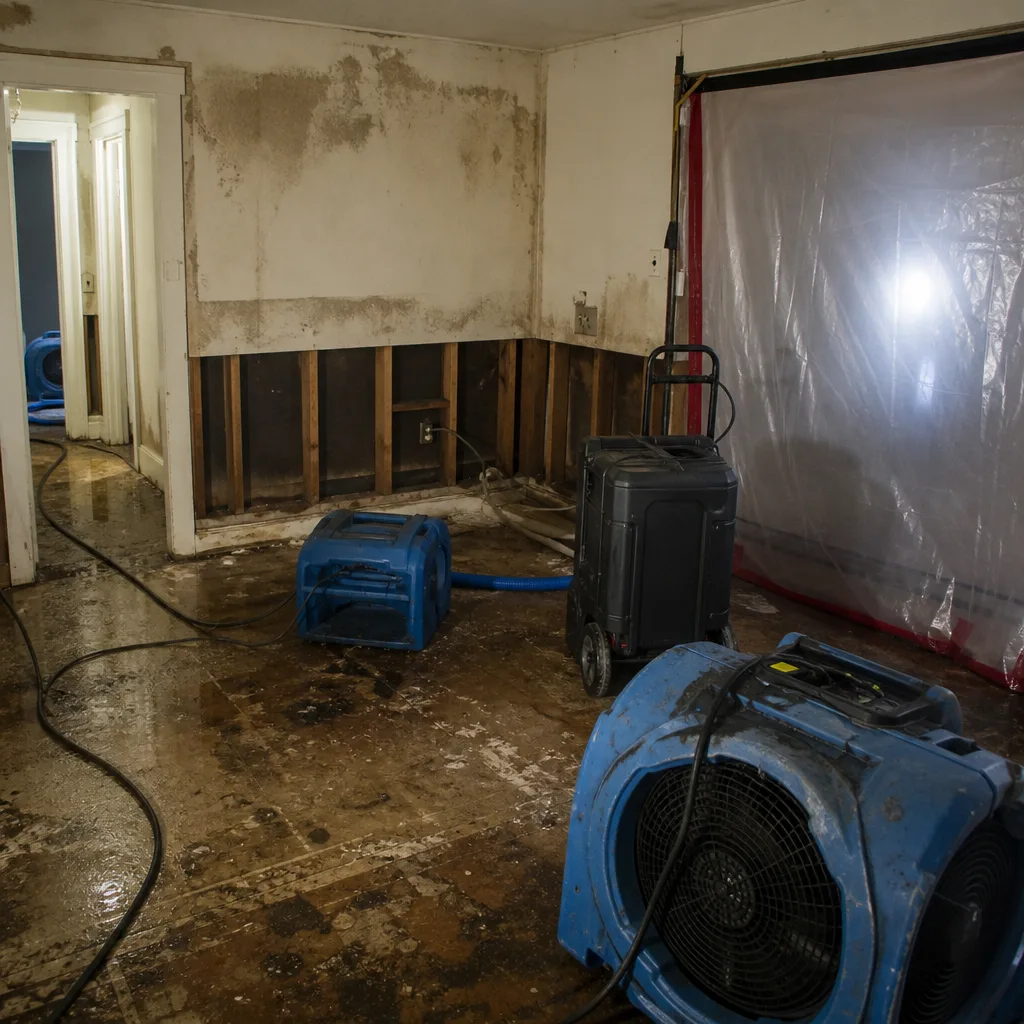 Before
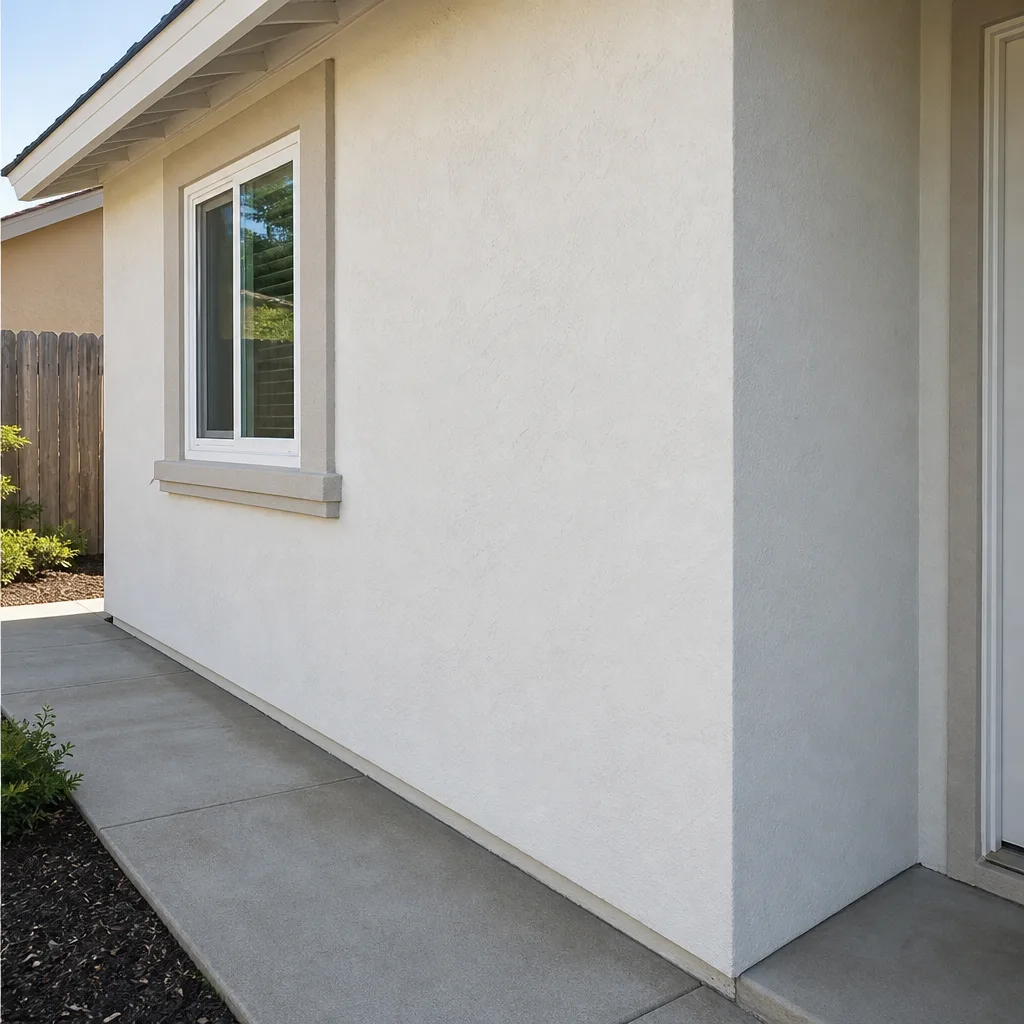 After
After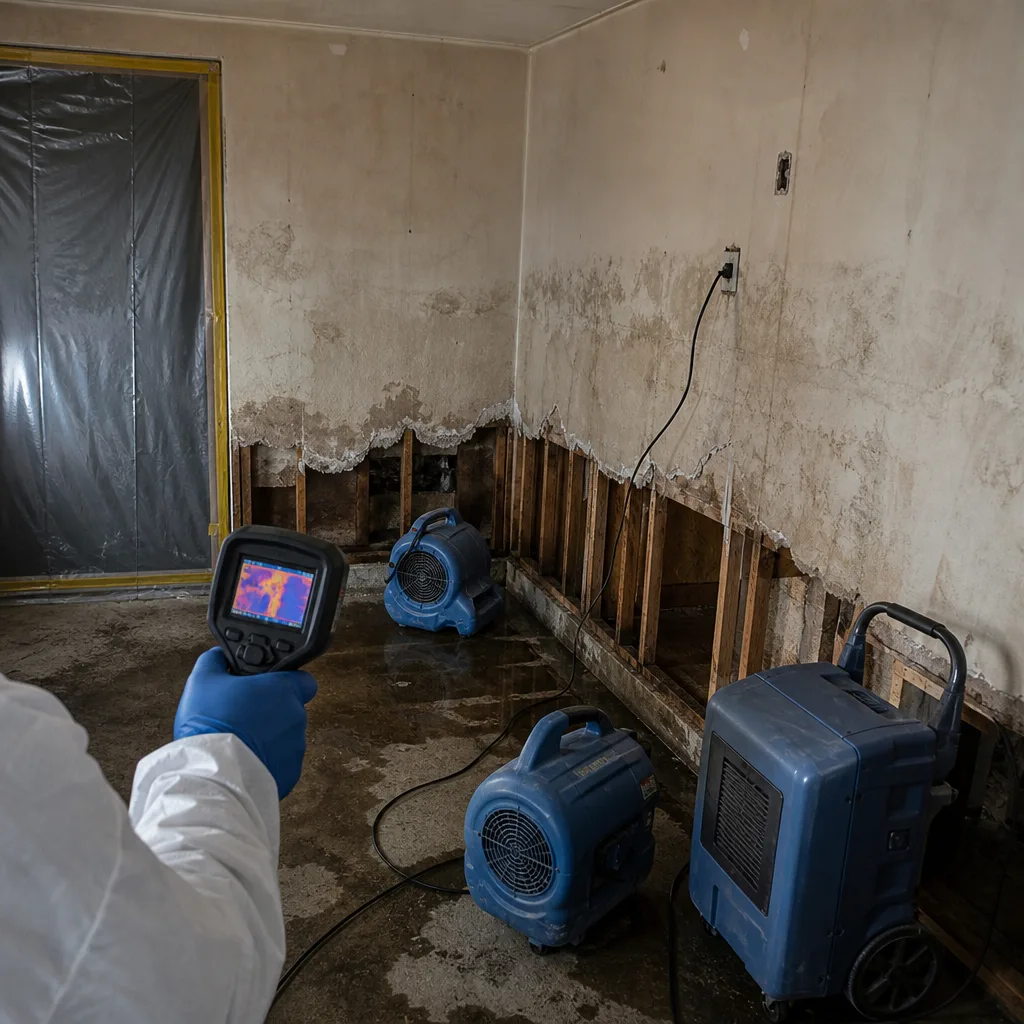 Before
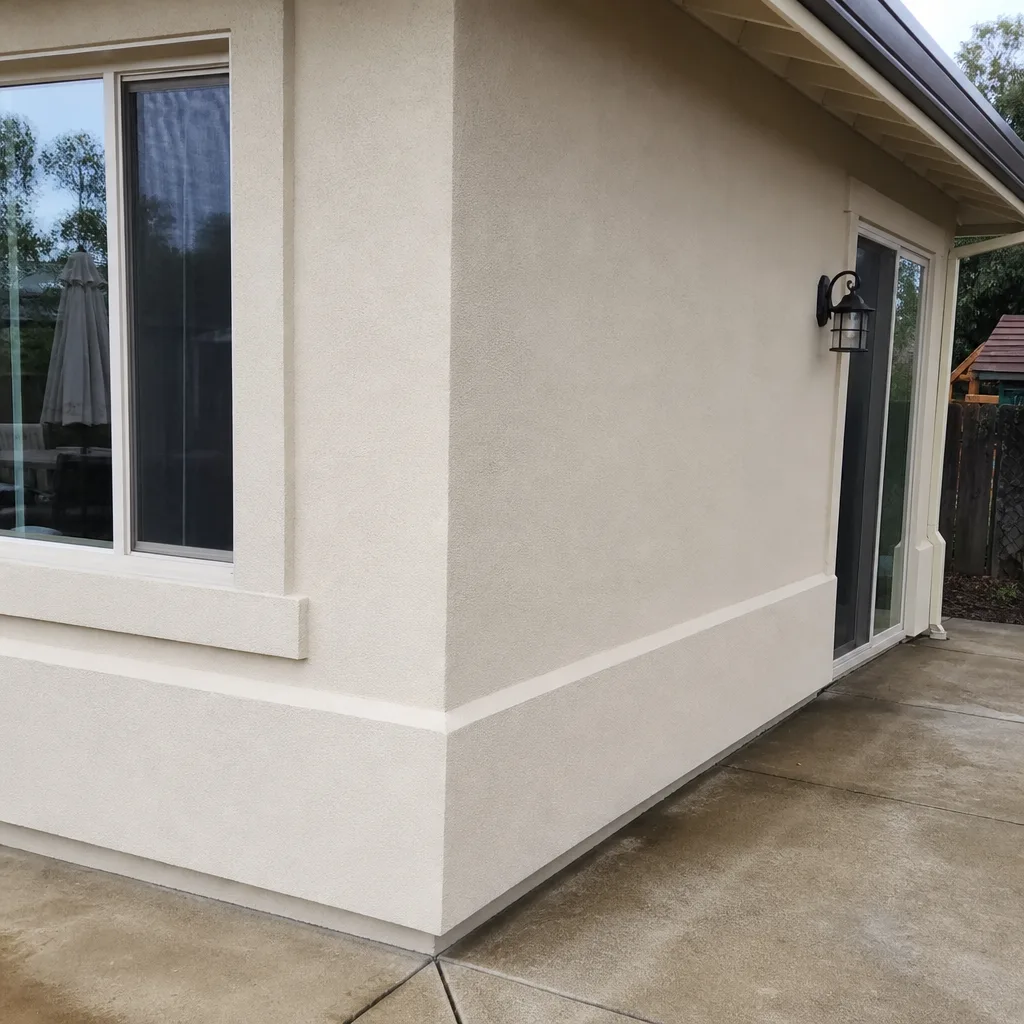 After
AfterCommon Water Damage Restoration Problems We See in North Highlands Homes
- Slab leaks that go unnoticed for days. Water travels under tile and into base cabinets before it shows on the surface. By the time a homeowner sees it, moisture has already wicked into drywall and framing. Moisture mapping catches what the eye misses.
- Polybutylene pipe failures in 1970s and 80s ranches. These pipes fail suddenly and catastrophically, and the water is never clean. Pipe corrosion and wall cavity debris make it Category 2 at minimum, which means antimicrobial treatment isn’t optional.
- Flat-lot stormwater pooling at the foundation. North Highlands lots drain poorly, so winter rain sits against the house and finds its way into crawl spaces. Without structural drying and vapor barrier checks, subfloor warping and mold behind skirting boards become chronic problems.
- Roof-driven water damage from aging composition shingles. Many original roofs on 1950s and 60s North Highlands homes have been through decades of Sacramento wet winters. Leaks start small in the attic and travel down through wall cavities before staining a ceiling.
Pricing for Water Damage Restoration in North Highlands, CA
A typical emergency water extraction and structural drying job in North Highlands runs $2,800 – $5,200. Smaller contained losses, like a washing machine supply line that was caught quickly, can run $1,200 – $2,400. Whole-house losses from a burst polybutylene main in the Elverta Road corridor often land at $6,000 – $9,500 because of the square footage, the slab drying required, and the antimicrobial treatment. Your written price comes before any work starts, and there are no surprises on the final invoice. Call (279) 277-2396 for a free estimate.
We Also Serve Cities Near North Highlands
Tidemark Water Damage Sacramento provides Water Damage Restoration to the wider metro, and we’re familiar with the housing stock in Antelope, Carmichael, Citrus Heights, and Fair Oaks. If you’re searching for Water Damage Restoration in North Highlands specifically, you’re already in the right place.
Serving North Highlands, CA - Our Local Coverage Area
We’re based in the North Highlands area and know this community well. Use the map below to see our service coverage - if you’re nearby, we can almost certainly help.
FAQs About Water Damage Restoration in North Highlands
We’re typically on-site within 60 – 90 minutes of your call, and the drying equipment is on the truck. Extraction starts the moment we arrive. Polybutylene bursts dump water fast, so that first hour is spent removing standing water and stopping it from spreading under flooring and into wall cavities. Call (279) 277-2396 and a live person starts the dispatch.
Yes. Concrete holds moisture, and mold in a slab foundation can start in 48 – 72 hours under the right conditions. The bigger risk in North Highlands ranches is hidden water that moved under cabinets and tile before it ever showed on the surface. If water sat for two or three days, moisture mapping and antimicrobial treatment are part of the scope, not an add-on.
Category 2. Galvanized pipes corrode from the inside, so when they split, the water carries rust, pipe scale, and wall cavity debris. Treating it as clean water and skipping antimicrobial treatment leads to failed air quality tests and callbacks. We classify the water correctly before drying starts, because the category changes the protocol.
Often yes, if we get there before warping becomes permanent. We use Injectidry floor drying systems and Phoenix dehumidifiers to pull moisture from the subfloor from above and below the crawl space. The key is drying past the tide mark, which is the line water leaves on a wall or subfloor. That’s the first thing our technicians look for on every job.
North Highlands has an unusually high concentration of polybutylene pipes from the 1970s and 80s, and most homes sit on flat, poorly drained lots with concrete slabs or raised foundations. That combination means water spreads horizontally through the slab and pools against the foundation. Restoration companies that don’t use moisture mapping miss hidden water in concrete slabs and get callbacks for mold. We dry past the tide mark, not just to the edge of the visible stain.
Written by Rick Sumner, Owner at Tidemark Water Damage Sacramento, serving North Highlands with water, mold, and fire restoration since 2006.